
The Modern Man’s Wardrobe Strategy
Building a sharp wardrobe doesn’t require owning dozens of suits. In fact, the most well-dressed men often rely on a smaller, carefully chosen collection that works harder through thoughtful combinations. The key isn’t quantity—it’s versatility.
When suits, shirts, and trousers are selected with coordination in mind, each piece becomes part of a system rather than a standalone item. A single jacket can serve multiple roles. One pair of trousers can anchor different looks. With the right foundation, a few suits can cover business meetings, formal events, and social occasions without ever feeling repetitive.
Mixing and matching isn’t about dressing casually or cutting corners. Done correctly, it’s a deliberate approach that balances practicality with polish. It allows you to adapt to different settings while maintaining consistency in fit, proportion, and style.
In this guide, we’ll explore how to maximise your wardrobe by choosing the right base colours, understanding what pieces work well together, and avoiding common mix-and-match mistakes—so you can look well put together without owning more than you need.
Start with Versatile Suit Colours
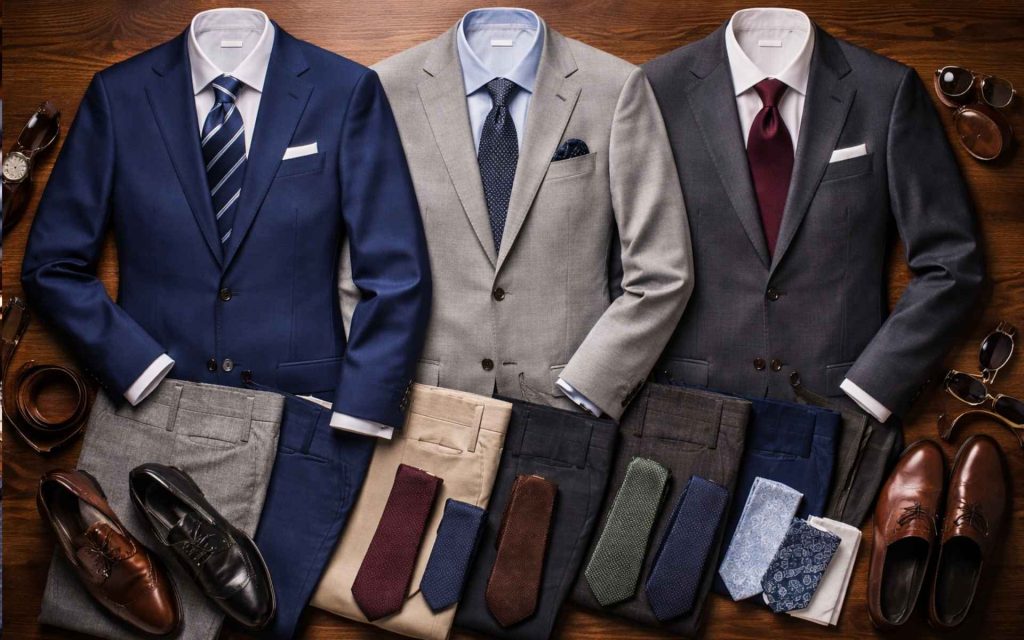
An adaptable wardrobe begins with the right colour foundation. Neutral, versatile shades allow your suits to work across multiple settings without feeling repetitive. Navy is a prime example—it functions effortlessly as a full suit for formal meetings, yet breaks down just as well when the jacket is paired with lighter trousers for a business-casual look. Mid-grey and charcoal offer similar flexibility, matching comfortably with tan, beige, or deeper blue trousers.
Versatility isn’t just about colour—it’s also about fabric choice. Subtle textures in navy or grey add depth and character, helping a suit transition more naturally between formal and semi-formal occasions. Compared to flat, high-sheen finishes, textured weaves feel less rigid and more adaptable in everyday wear.
At C. Armani Tailors, we often advise clients to begin with two or three core suit colours when building a custom wardrobe. Chosen thoughtfully, these shades integrate easily with a wide range of shirts, ties, and footwear—giving you more combinations without visual conflict or excess pieces.
Jacket and Trouser Separation: The Smart Casual Move
One of the advantages of well-considered tailoring is balance—when jackets and trousers are cut to complement your proportions, they also gain flexibility beyond being worn as a set. A suit doesn’t always have to stay intact. In fact, separating the pieces is one of the simplest ways to expand your wardrobe without adding more garments.
A navy jacket, for instance, pairs effortlessly with grey wool trousers and an open-collar white shirt for a relaxed yet professional Friday look. Swap in light khaki trousers and a knit tie, and the same jacket transitions easily into a creative event or smart-casual dinner. The foundation remains sharp, but the mood shifts.
Trousers offer similar versatility. A charcoal pair works seamlessly with patterned sport jackets or unstructured blazers, grounding the outfit while allowing more personality up top. Once you understand how tones and textures interact, mixing becomes intuitive rather than risky.
The key is intention. When colours are compatible and fabrics are chosen thoughtfully, separating jackets and trousers opens up a wide range of outfit combinations—proving that versatility often comes from how you wear your clothes, not how many you own.
Shirts: The Quiet Game-Changer
Shirts carry far more visual weight than most people realise. Even small changes—switching from crisp white to powder blue, or introducing a subtle Bengal stripe or micro-check—can significantly alter the tone of an outfit without changing the suit itself.
From a practical perspective, owning four to five well-fitted shirts—some plain, some lightly patterned—allows you to refresh your look repeatedly. A charcoal suit paired with a white shirt and black tie reads sharp and classic; change to a light pink shirt with a navy tie, and the same suit immediately feels softer and more relaxed. The structure stays the same, but the mood shifts.
Well-made shirts elevate this versatility further. When a shirt fits cleanly across the shoulders, sits properly at the collar, and allows natural movement through the arms, it layers better under jackets and looks just as confident on its own. At C. Armani, shirts are tailored with these details in mind, so whether worn as part of a full suit or styled more casually, they support the overall look rather than limiting it.
In many cases, it’s the shirt—not the suit—that does the heavy lifting when it comes to variety.

The Power of Accessories
Accessories are perhaps the most cost-effective way to multiply your wardrobe’s versatility. A single suit can look radically different with the simple change of tie, pocket square, belt, or watch.
Consider the range of looks achievable from a navy suit and white shirt:
- Add a burgundy silk tie and crisp white pocket square for a formal business meeting.
- Swap to a forest green knit tie and a patterned pocket square for a smart casual event.
- Go tie-less, add a textured brown leather belt, and wear loafers for a relaxed evening gathering.
Even socks, lapel pins, and cufflinks play a subtle but important role in making your outfit feel intentional and appropriate to the occasion.
Fabric and Texture as Style Signals
Fabric choice doesn’t just affect comfort—it subtly shapes how an outfit is perceived. A wool flannel suit reads softer and more relaxed than a sharp worsted wool. Linen introduces an easy, summery character, while patterns like herringbone or twill add depth without relying on bold colour.
By rotating pieces with different weights and textures, you create visual contrast even when working within the same colour family. A navy wool blazer paired with grey flannel trousers conveys a very different mood compared to the same blazer worn with grey cotton chinos—even though the palette remains unchanged.
These nuances are what allow a smaller wardrobe to feel expansive. For those who enjoy dressing with intention, fabric and texture become quiet tools for expression. At C. Armani Tailors, guidance goes beyond fit alone—we help clients choose fabrics seasonally and strategically, so comfort and variety evolve naturally throughout the year.
Footwear and the Role of Shoes
Shoes anchor an outfit—both visually and stylistically. A grey suit paired with brown derbies immediately feels more relaxed than the same suit worn with black Oxfords. Monk straps, loafers, and Chelsea boots each shift the tone further, signalling different levels of formality and personal style.
When working with a smaller suit rotation, footwear becomes one of the easiest ways to extend your outfit range. Changing shoes can make a familiar suit feel entirely different without altering the core pieces.
Fit matters here as well. Trouser length and break should complement the type of shoe you wear most often. A clean line over Oxfords may not sit the same over loafers or boots, which is why this is something a good tailor accounts for during fittings. When trousers are hemmed with footwear in mind, the entire outfit looks more intentional—no matter how often you repeat the suit.
The Case for Waistcoats and Layering
Introducing a waistcoat into your wardrobe instantly expands your styling options. Worn as part of a three-piece suit, it delivers classic formality. Styled on its own with tailored trousers and an open-collar shirt, it shifts into a refined smart-casual statement—structured without feeling rigid.
A well-cut waistcoat also offers flexibility across settings and climates. At outdoor events or long functions, removing the jacket while keeping the waistcoat preserves a tailored silhouette while allowing greater comfort. You remain polished, just more at ease.
Layering extends beyond waistcoats. Fine-gauge knits, lightweight cardigans, or slim turtlenecks worn under a suit jacket introduce variety during cooler months, changing the character of the same suit without altering its core structure. When layering is done thoughtfully, it adds both function and quiet sophistication—proof that versatility often comes from how pieces work together, not how many you own.
It’s Not Just About Looks—It’s About Confidence
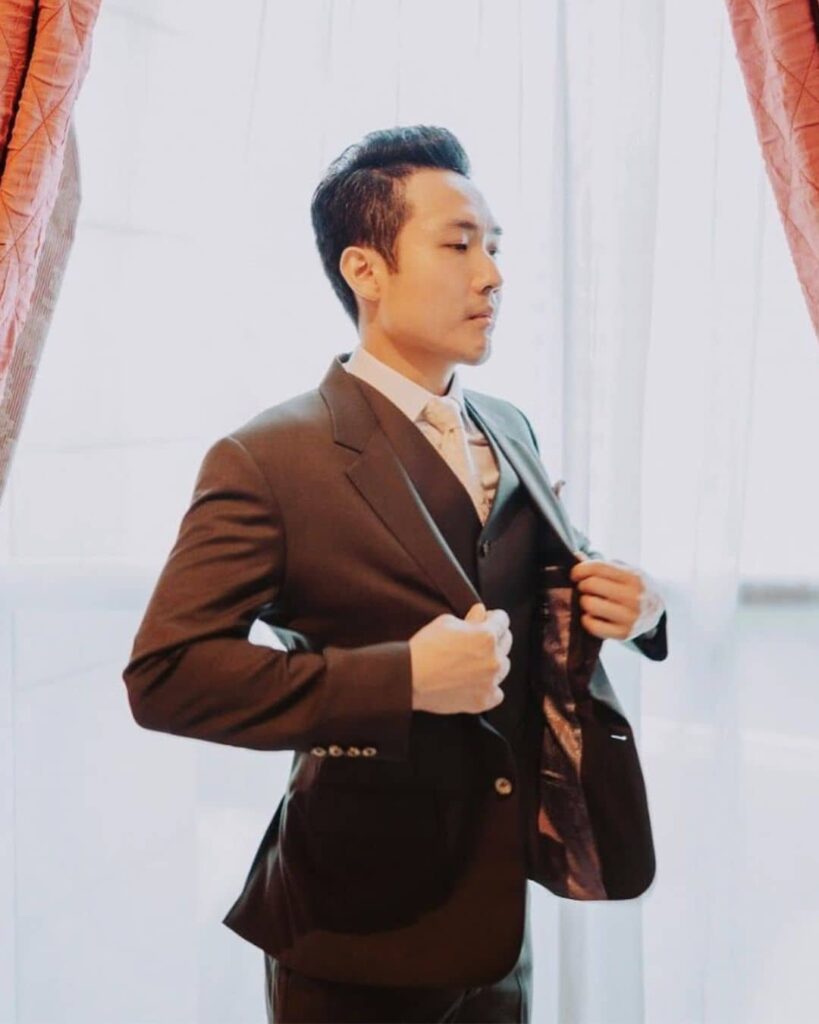
At the core of mixing and matching is confidence. When your clothes fit properly, reflect your personality, and adapt effortlessly to different settings, you’re not just dressed—you’re prepared.
There’s a psychological advantage as well. Repeating outfits can create unnecessary self-consciousness, especially in professional or high-profile environments. But when pieces are chosen with versatility in mind, the same suit can be worn multiple times without ever feeling repetitive. Small shifts in shirts, footwear, or layering keep the look fresh while maintaining consistency.
That confidence shows in subtle ways—how you stand, how you move, how you engage with others. And ultimately, that ease and assurance are what elevate personal style beyond appearance alone.
Bespoke: The Foundation of Flexibility
True versatility starts with fit. If a jacket pulls at the shoulders or trousers lose their shape at the seat, no amount of styling or accessorising can correct the imbalance. When the foundation is off, flexibility disappears.
That’s where bespoke tailoring makes a difference. Instead of focusing solely on measurements, the process considers how you actually live and dress. How often you travel. The types of events you attend. Whether your wardrobe needs to shift seamlessly between business, social settings, and more relaxed environments.
At C. Armani Tailors, each piece is designed with that bigger picture in mind. The goal isn’t just a good fit on day one, but garments that continue to work across different occasions and styling choices. When the cut is right and the proportions are balanced, everything else—mixing, layering, adapting—falls into place naturally.
That’s what turns a small wardrobe into a flexible one.
Closing Thoughts
You don’t need a dozen suits to dress well. With a thoughtful approach to colour, texture, and accessories—anchored by proper tailoring—a small wardrobe can deliver remarkable range. A few well-chosen pieces, styled with intention, can cover far more ground than an overflowing closet.
Whether you’re building your first tailored wardrobe or refining what you already own, the key is versatility. Consider how each garment can adapt to different settings and occasions. When every piece has a purpose, mixing and matching becomes less about compromise and more about craft.
Visit us at 02-42 Far East Plaza, 14 Scotts Road, Orchard 228213, or book a consultation to explore tailoring that’s designed to work with your lifestyle. At C. Armani Tailors, we don’t just make suits—we make sure they make sense for you.



0 Comments