
Comfort Is the Foundation of a Good Suit
hen choosing a suit, many people focus on price tags, brand names, or thread counts. But comfort—the kind that lets you move naturally, breathe easily, and wear the suit for hours without distraction—starts somewhere far more fundamental: the fabric itself.
A suit can be expensive and still feel stiff, heavy, or restrictive. Conversely, a thoughtfully chosen fabric can make even a simple design feel effortless and wearable. Texture, weight, weave, and breathability all influence how a suit behaves on the body, especially in warm, humid environments like Singapore.
Understanding fabric isn’t about memorising technical terms or chasing “premium” labels. It’s about knowing how a material feels against your skin, how it responds to movement, and how it holds up over a full day of wear. In this article, we’ll explore why fabric choice plays a bigger role in comfort than price—and how selecting the right one can transform how you experience a suit.
Comfort Feels Different to Everyone
Some men prefer suits that feel buttery smooth and glide over the skin. Others find comfort in suits with structure and a sense of weight. There is no “best” fabric for comfort—only the best fabric for you.
For example:
- Silky-feel enthusiasts may gravitate toward superfine wools or blends with silk, bamboo, or viscose. These fabrics tend to feel cool to the touch and smooth across the skin.
- Fans of structure and thickness might feel more secure in mid-weight wool or cotton twill. These materials offer a denser, more grounded sensation that some associate with authority or formality.
This is why fabric choice should never be reduced to thread count or price. Comfort is inherently subjective. We believe in listening first—then tailoring the recommendation.
Choosing the Right Fabric for Singapore’s Climate
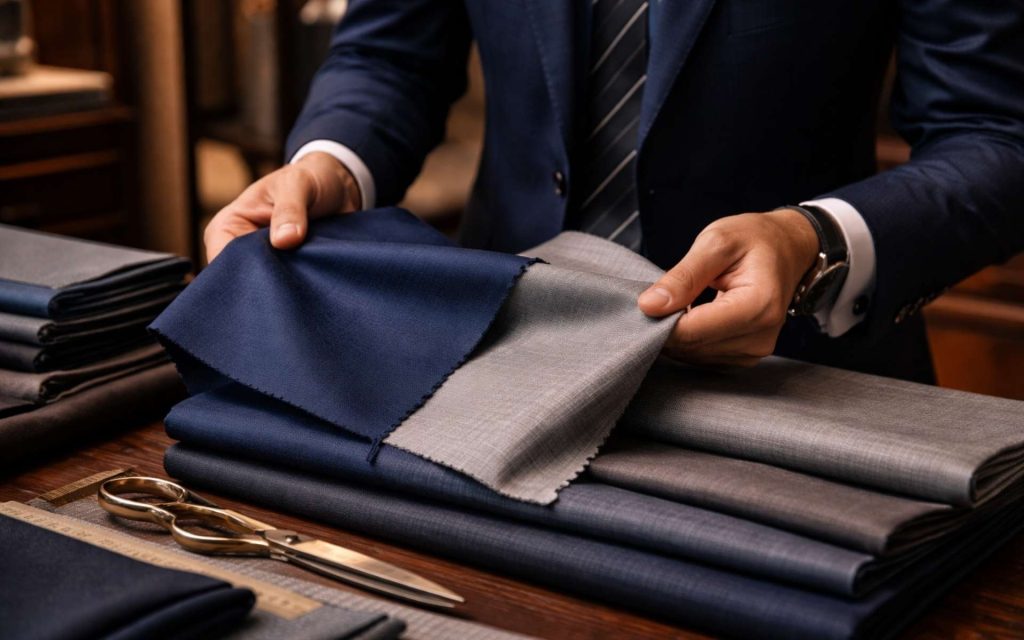
Singapore’s warm, humid climate places unique demands on suiting fabric. Comfort here isn’t about luxury labels—it’s about breathability, weight, and how the fabric behaves over long hours of wear. A material that traps heat or lacks airflow will feel uncomfortable quickly, no matter how sharp it looks at first glance.
Lightweight wool remains one of the most reliable choices. Open-weave wools allow air to circulate, helping regulate body temperature while maintaining structure. Wool-silk blends add softness and a subtle sheen without compromising breathability, while high-twist wool resists creasing and feels cooler against the skin—ideal for full-day wear.
Linen and linen blends offer excellent airflow and a relaxed texture, making them suitable for daytime or outdoor events, though natural creasing should be expected. For those who prefer a cleaner finish with less wrinkle, lightweight tropical wool strikes a balance between polish and comfort. These considerations are especially important when commissioning a tailor made suit Singapore clients intend to wear regularly in local conditions.
Ultimately, the right fabric should feel comfortable the moment you put it on—and remain so hours later. When fabric choice aligns with climate and lifestyle, the suit works with your body rather than against it.
How Fabric Choice Impacts Fit and Longevity
Fabric doesn’t just affect how a suit feels—it directly influences how well it fits over time and how long it holds its shape. Some materials are more forgiving, adapting naturally to movement and wear, while others are less resilient and show fatigue more quickly.
Lighter, breathable fabrics tend to drape more fluidly, allowing the suit to move with your body rather than resist it. This reduces stress on seams, armholes, and high-movement areas like the back and seat. In contrast, overly stiff or heavy fabrics may look structured initially but can feel restrictive and lose balance as the body moves throughout the day. Over time, this tension can exaggerate fit issues.
Durability is also closely tied to fabric quality and weave. High-twist wool and well-constructed blends resist creasing and recover their shape better between wears, extending the lifespan of the suit. Softer fabrics may feel luxurious at first but require more careful maintenance to prevent stretching or shine, especially in frequently worn areas. These considerations matter greatly when investing in a tailor made suit singapore professionals expect to rely on regularly.
Ultimately, a suit that fits well on day one should continue to fit well months and years later. Choosing fabric with both comfort and resilience in mind ensures the tailoring remains flattering and functional long after the first wear.
Movement Is a Type of Comfort Too
A well-fitted suit shouldn’t fight your body—it should move with it. While cut and construction play a role, fabric choice has a major influence on how natural that movement feels throughout the day.
Softer, drapier fabrics such as wool-silk blends or fine crepe tend to flow more easily and recover better as you sit, walk, or reach. They crease less aggressively and feel more forgiving in motion. Heavier or stiffer weaves, on the other hand, may hold structure well but can create resistance when you bend your arms or shift your shoulders, even when the tailoring is precise.
Comfort in motion is also highly personal. Some men prefer the crisp feedback of a structured suit—it feels sharp and composed. Others favour a lighter, more fluid drape that almost disappears once worn. Neither preference is right or wrong, but the experience is noticeably different.
This is why we always encourage clients to try on sample suits with similar drape and weight before committing to a fabric. How a suit feels when you move often matters just as much as how it looks standing still.
Comfort vs. Occasion: A Balancing Act
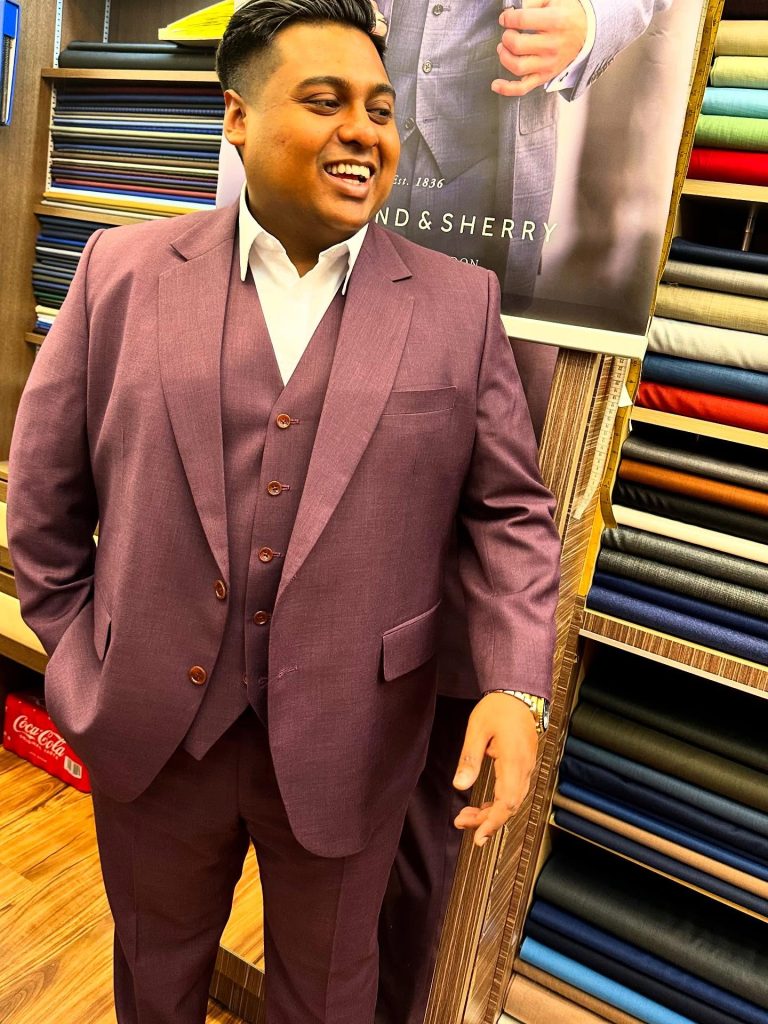
Certain occasions come with clear expectations. Gala nights, black-tie weddings, and formal D&Ds often call for deeper colours, richer textures, and a more polished finish. But formality doesn’t have to come at the expense of comfort.
The balance lies in choosing the right fabric for the setting. A midnight blue wool–mohair blend, for example, delivers the sheen and elegance suited to evening events while remaining lighter and cooler than a traditional heavyweight wool. The look reads formal, but the feel stays manageable over long hours.
The guiding principle is simple: design the suit for the occasion, but select the fabric for the wearer. If you’ll be seated under stage lights, moving between venues, or standing for extended periods, comfort becomes more than a preference—it affects how present and composed you feel. A suit that distracts with heat, stiffness, or irritation undermines even the most refined appearance.
When comfort and occasion are aligned, the suit supports the moment rather than competing with it.
Breathability Is Underrated—Until It’s Too Late
Breathability is often overlooked—until you’re halfway through a long wedding dinner or standing through hours of speeches at a corporate retreat. Fabrics that trap heat or moisture can turn an otherwise confident moment into quiet discomfort surprisingly quickly.
Materials like lightweight wool, bamboo blends, and open-weave fabrics such as fresco wool allow air to circulate more effectively, helping regulate temperature without sacrificing structure. The result is a suit that stays composed—both visually and physically—no matter how demanding the setting.
At C. Armani Tailors, we guide clients toward breathable fabric options that still look refined and appropriate for formal occasions. Comfort doesn’t have to come at the expense of elegance. When breathability is built into the fabric choice, you stay cool without ever looking casual.
Why Fabric Trials Should Be Part of the Process
Comfort can’t be predicted from a label or swatch card alone. Until you’ve touched a fabric, worn it, and moved in it, it’s impossible to know how it will truly feel over a full day. That’s why fabric trials matter—they turn assumptions into informed choices.
During a consultation, we encourage clients to compare more than just colours or patterns. Attention is given to texture, weight, and how each fabric responds when handled or bent. Some materials feel cool and fluid immediately; others reveal their character only once you move. These differences are subtle but meaningful, especially when comfort is a priority.
At C. Armani Tailors, clients are guided through fabric options based on how the suit will be worn, individual skin sensitivity, and local climate conditions. There’s no pressure to decide based on reputation or price alone. And when uncertainty remains, trial samples can be prepared before the final cut—so confidence comes from experience, not guesswork.
When fabric choice is informed by feel rather than assumption, comfort becomes intentional rather than accidental.
Final Thoughts: Choose What Feels Like You
Fabric choice isn’t just technical—it’s personal. The way a suit feels on your body influences posture, comfort, and confidence across hours of wear. When the fabric works with you, everything else comes together more naturally.
It’s worth moving past the idea that higher price or higher grades automatically mean better comfort. The right fabric is the one that suits your skin, your climate, and how you move through your day. When a suit feels right, you wear it differently—and that difference shows.
At C. Armani Tailors, we believe real luxury is personal. It begins with comfort and ends with a suit that truly feels like yours. With tailored suits starting from $279 and express turnaround available in as fast as 3 days, getting the right balance of comfort, fit, and intention doesn’t have to wait.
Visit us at 02-42 Far East Plaza, 14 Scotts Road, Orchard 228213, or book a consultation to experience tailoring that makes sense—for your body, your lifestyle, and your confidence.



0 Comments